Plantar Fasciitis & Heel Pain Treatment in Drouin and Traralgon
Sharp heel pain with your first steps in the morning? It could be plantar fasciitis, and there are more treatment options than you might think.
At Cocoon Acupuncture, our AHPRA-registered Chinese medicine practitioners treat heel and foot pain with acupuncture, dry needling and other hands-on therapies. Our clinics are in Drouin and Traralgon, close to Warragul, Moe and Morwell.
What is plantar fasciitis?
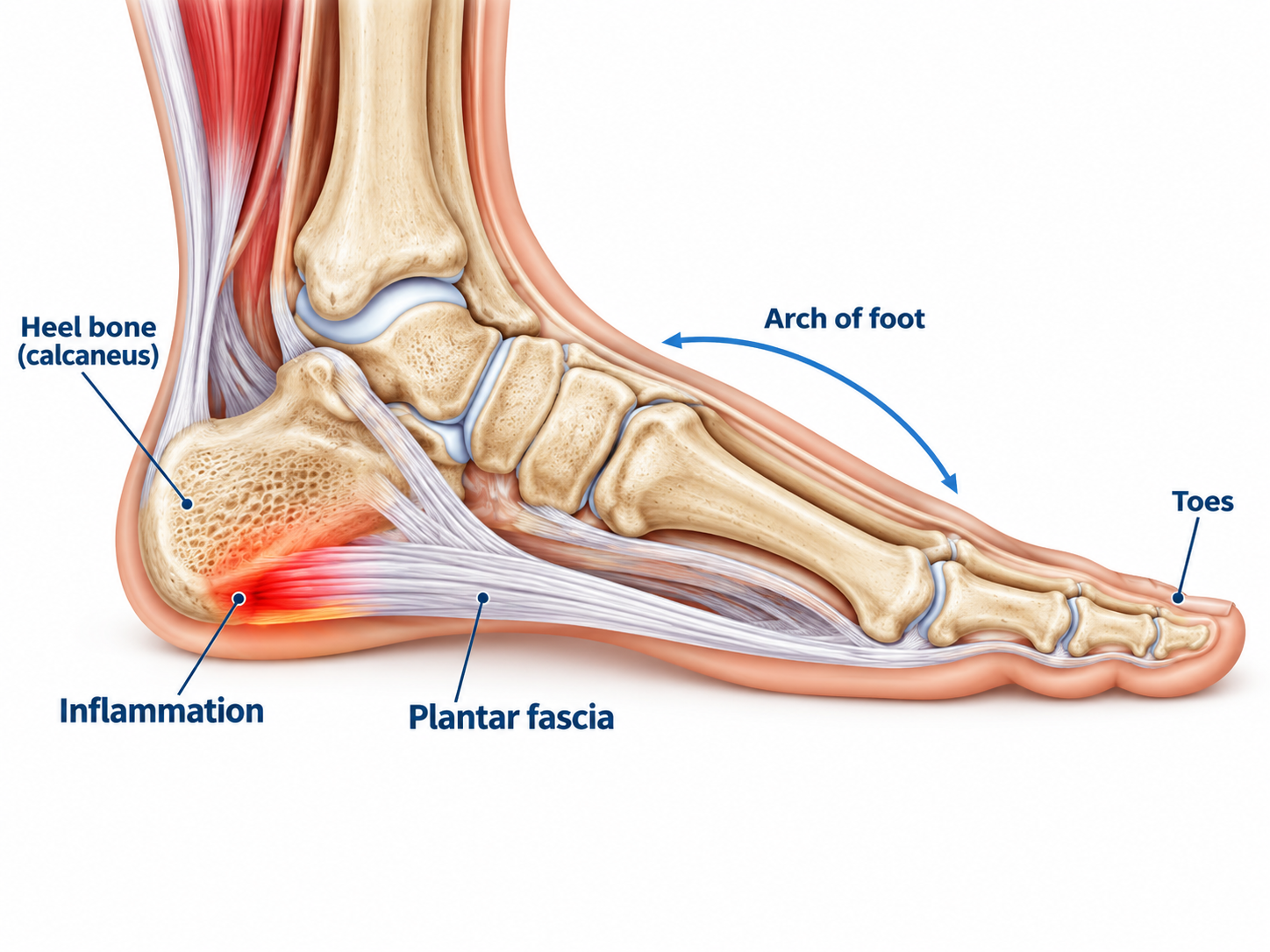
The plantar fascia is a thick band of tissue along the sole of your foot, running from your heel bone to your toes. It supports your arch and absorbs load every time you stand, walk or run. When it becomes irritated or overloaded, the result is plantar fasciitis, one of the most common causes of heel pain in adults.
Common signs include:
Sharp or stabbing pain under the heel, especially with the first steps out of bed
Pain after sitting or resting for a while that eases a little once you get moving
Heel pain that worsens after long periods of standing, walking or exercise
Tenderness when pressing on the inside of the heel
It's more common if you:
Spend long hours on your feet at work, for example in healthcare, retail, hospitality, trades, or on a farm
Have recently increased your walking, running or training
Wear unsupportive or worn-out footwear
Have tight calf muscles or flat or high-arched feet
Are carrying extra weight or have had a recent change in weight
Plantar fasciitis often settles with time and the right care, but for many people it lingers for months and affects work, exercise and sleep.
How we approach heel pain at Cocoon
Every treatment starts with a thorough consultation. We ask about your pain, your work and activity, your footwear, your general health, and what you've already tried. If anything suggests your heel pain needs medical investigation, we'll refer you to your GP.
Depending on your assessment, your treatment plan may include:
Acupuncture: fine, sterile, single-use needles placed at points on the foot, lower leg and elsewhere on the body
Dry needling (trigger point needling): needling of tight, tender points in the calf and foot muscles that can contribute to heel pain
Electro-acupuncture: gentle electrical stimulation applied through acupuncture needles
Cupping and massage (tui na): hands-on techniques for the calf and lower leg, where tightness often contributes to heel pain
Heat therapy: including moxibustion or infrared heat
Herbal liniments: topical preparations applied to the affected area
Practical self-care advice: stretching, loading and footwear guidance you can use between visits
Acupuncture or dry needling: what's the difference?
If you've been searching for dry needling for plantar fasciitis, you're in the right place.
Dry needling and acupuncture both use the same fine, sterile, single-use needles. The main difference is the approach:
Dry needling focuses on myofascial trigger points, which are tight, tender knots in a muscle. For heel pain, these are commonly found in the calf muscles (gastrocnemius and soleus) and in the small muscles in the sole of the foot. Needling these points aims to release muscle tension that can increase strain on the plantar fascia.
Acupuncture includes local needling around the heel and lower leg, and may also use points elsewhere on the body selected according to Chinese medicine principles.
In practice, there's a lot of overlap. Many of the trigger points targeted in dry needling sit at or near traditional acupuncture points. At Cocoon, your practitioner may use a combination of both approaches, depending on your assessment and what you're comfortable with.
Our practitioners hold degree-level qualifications in Chinese medicine, which include extensive training in needling techniques, anatomy and clinical safety. They are registered with the Chinese Medicine Board of Australia through AHPRA.
What does the research say?
Several clinical trials and systematic reviews have looked at acupuncture and dry needling for plantar heel pain. Some studies have found that needling may reduce pain and improve function in the short term, particularly when used together with standard care such as stretching. The quality of the evidence varies, and results differ from person to person. We'll talk you through realistic expectations at your first appointment.
Working alongside your other care
Acupuncture and Chinese medicine can be used alongside care from your GP, podiatrist or physiotherapist. Many of our patients are already seeing other health professionals, and we're happy to work as part of your broader care team.
When to see your GP first
Please see a GP or seek urgent care if your heel pain:
Followed an injury, fall or a "pop" in the heel or calf
Comes with swelling, redness, heat or fever
Includes numbness, tingling or burning in the foot
Is severe at night or at rest
Occurs alongside diabetes or circulation problems
Serving West and Central Gippsland
Cocoon Acupuncture Drouin
2/2 Sinclair Street Drouin.
Convenient for patients from Drouin, Warragul, Longwarry, Buln Buln and the surrounding Baw Baw area.
Cocoon Acupuncture Traralgon
134 Princes Street Traralgon.
Convenient for patients from Traralgon, Morwell, Moe, Churchill and the wider Latrobe Valley.
Frequently asked questions
Do you offer dry needling? Yes. Our practitioners use trigger point (dry) needling techniques as part of treatment where appropriate, often combined with acupuncture. If you have a preference, let us know when you book or at your first appointment.
Does acupuncture or dry needling hurt? The needles are much finer than those used for injections. Most people feel a brief pinch or a dull, heavy sensation, and many find treatment relaxing. Points on the foot can be more sensitive, so we adjust to your comfort.
How many treatments will I need? It depends on how long you've had the pain, how severe it is, and your daily load on your feet. We'll discuss a treatment plan with you after your first assessment and review your progress as we go.
Do I need a referral? No. You can book directly with us without a GP referral.
Can I claim on private health insurance? Acupuncture is covered by many private health funds under extras cover. Rebates depend on your fund and level of cover, so check with your insurer. We have HICAPS on site so you can claim on the spot.
Is plantar fasciitis the same as a heel spur? Not exactly. A heel spur is a bony growth that can show up on an X-ray, and it often appears alongside plantar fasciitis. Many people with heel spurs have no pain, and many people with plantar fasciitis have no spur. Treatment usually focuses on the soft tissue and on load, not the spur itself.
I'm on my feet all day at work. Can you still help? Yes. Many of our patients with heel pain work long shifts on their feet. We'll factor your work demands into your treatment plan and self-care advice.
Individual results vary. Our practitioners are registered with the Chinese Medicine Board of Australia through AHPRA.